
gjoe
07-14 02:35 PM
Looks like the situation in this thread is going to get from bad to worse.
wallpaper Kommentare zum Auto Audi A4

rajeshiv
07-10 01:04 PM
That's correct spelling mistakes, etc., can be corrected if you go back to the port of entry who generated the I-94 card.
I 102 is more for replacement of an I-94 card.
However; POE entering you on a wrong companies h-1b isn't so easily correctible after the fact.
In situations such as this; it is better to go back out and re-enter with proper company h-1b.
In May and June before people were getting ready to file the 485's a lot of these issues were found in reviewing their files/history. Many people had their visas expired and they didn't want to go for visa stamping. What many people did was go to Canada and use auto revalidation and then re-enter USA on the proper companies h-1b and/or get a new I-94 card and also reset the 245k benefit since it is measured from the date of last entry to filing the 485.
Hello United Nations..
After looking into above message...I have some doubts, could you please clarify them.
1. In order to file 485, the person must have a valid visa in his passport?
In my case I have a valid I 94 but my visa got expired 2 months back, Am I eligible to file 485?
2. What is auto revalidation?
I appreciate for your answers.
Thanks
RR
I 102 is more for replacement of an I-94 card.
However; POE entering you on a wrong companies h-1b isn't so easily correctible after the fact.
In situations such as this; it is better to go back out and re-enter with proper company h-1b.
In May and June before people were getting ready to file the 485's a lot of these issues were found in reviewing their files/history. Many people had their visas expired and they didn't want to go for visa stamping. What many people did was go to Canada and use auto revalidation and then re-enter USA on the proper companies h-1b and/or get a new I-94 card and also reset the 245k benefit since it is measured from the date of last entry to filing the 485.
Hello United Nations..
After looking into above message...I have some doubts, could you please clarify them.
1. In order to file 485, the person must have a valid visa in his passport?
In my case I have a valid I 94 but my visa got expired 2 months back, Am I eligible to file 485?
2. What is auto revalidation?
I appreciate for your answers.
Thanks
RR

h1techSlave
12-26 01:38 PM
A full fledged war between India and Pakistan is very very unlikely.
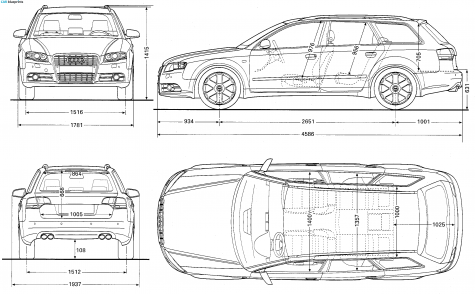
2011 Marque/type : AUDI A4 AVANT

sin94
03-24 12:17 PM
face it as long as the economy is tanking this is going to be an ongoing debate. Everything goes thorugh stages of high and low and we are now expereincing the lows of having the h1b's.
Sledge While your points are valid, remember folks do not choose consulting (nor do students) as a first choice but I have friends who were employed without any issues directly with client companies who in the midst of recession decide to fire everyone. What are you options if your GC is denied because the company declared bankruptcy? How do you justify to yourself staying with the employer when they files you under Eb3 category when you a master's degree holder from one of the 10 best universities in the US? What are the employee choices here, just pack up and leave? leave houses, friends and people you stayed with many years.
You think they haven't searched for full time positions with other companies only to be turned back? or worse case restart the entire GC process and forgo the 6+ years?
And the experiences I am relating are from the 2001 recession. I have already seen history repeat itself now but my more fear is that tomorrow USCIS will unfortunately hit the person who followed all the rules After all how is the USCIS knowing which are the good companies and which are bad? These very things are happening and very much can happen to you as well. Do not sit on a high perch and think it will not trickle down to me
Dude, it does not matter what you're reasoning is for getting into consulting. You do not even need to prove anything to me. Take your justification with you and present it to the guys that are going to approve your GC, NOT me!!!!
If you are still so hard headed that you do not want to accept realities, what can I say!
Sledge While your points are valid, remember folks do not choose consulting (nor do students) as a first choice but I have friends who were employed without any issues directly with client companies who in the midst of recession decide to fire everyone. What are you options if your GC is denied because the company declared bankruptcy? How do you justify to yourself staying with the employer when they files you under Eb3 category when you a master's degree holder from one of the 10 best universities in the US? What are the employee choices here, just pack up and leave? leave houses, friends and people you stayed with many years.
You think they haven't searched for full time positions with other companies only to be turned back? or worse case restart the entire GC process and forgo the 6+ years?
And the experiences I am relating are from the 2001 recession. I have already seen history repeat itself now but my more fear is that tomorrow USCIS will unfortunately hit the person who followed all the rules After all how is the USCIS knowing which are the good companies and which are bad? These very things are happening and very much can happen to you as well. Do not sit on a high perch and think it will not trickle down to me
Dude, it does not matter what you're reasoning is for getting into consulting. You do not even need to prove anything to me. Take your justification with you and present it to the guys that are going to approve your GC, NOT me!!!!
If you are still so hard headed that you do not want to accept realities, what can I say!
more...

gapala
12-17 05:24 PM
:D:D:D That atleast made my evening!
I can see tabletpc standing naked!!!!!:D
I can see tabletpc standing naked!!!!!:D
unitednations
03-26 04:26 PM
That is precisely why smaller companies choose to revoke the 140 when an employee leaves them while the 485 is still pending.
It isn't always to "get back" at the employee.
That being said, UN, I would love to hear your thoughts on this situation,
Person leaves employer X (140 approved, more than 180 days since 485 filing, etc.) and joins employer Y on EAD (under AC21).
Employer X revokes 140 so as to not run into any issues like you pointed out. Nothing personal against the employee, just business.
That person after a while decides to go back to employer X (485 is still pending) under AC21.
Does the USCIS look at that as okay to do? Or do they question the employer's intentions since the employer had earlier revoked the 140.
Thanks in advance for sharing your opinion on this.
I know that many people don't like it when their companies revoke I-140. They are not under any legal obligation to do so once the 140 is approved.
However; to protect all the people who are still there then they should revoke the 140 for people who have left so there is less burden to prove ability to pay in case uscis adds up all cases together. I work on a lot of these cases and they are pretty complicated to solve.
There was a case which we termed "baltimore" (mainly because it was decided by baltimore local office); essentially AAO said that a person can use ac21 within the same company (ie., for another job, another work location, etc.). That opened the door which some smart ass employers started to exploit. If one of their employees was eligible for ac21 they justified it by revoking 140 (even though person is still workin with them) and doing labor substitution for another candidate by thinking that first person is protected and i can use it for second person.
From a purety point of view; in your scenario since there is no labor substitution then it shouldn't be a problem; however, in pre labor substitution days if you went back to work for the company in ac21 and they used the labor for someone else then it would pose some challenges.
It isn't always to "get back" at the employee.
That being said, UN, I would love to hear your thoughts on this situation,
Person leaves employer X (140 approved, more than 180 days since 485 filing, etc.) and joins employer Y on EAD (under AC21).
Employer X revokes 140 so as to not run into any issues like you pointed out. Nothing personal against the employee, just business.
That person after a while decides to go back to employer X (485 is still pending) under AC21.
Does the USCIS look at that as okay to do? Or do they question the employer's intentions since the employer had earlier revoked the 140.
Thanks in advance for sharing your opinion on this.
I know that many people don't like it when their companies revoke I-140. They are not under any legal obligation to do so once the 140 is approved.
However; to protect all the people who are still there then they should revoke the 140 for people who have left so there is less burden to prove ability to pay in case uscis adds up all cases together. I work on a lot of these cases and they are pretty complicated to solve.
There was a case which we termed "baltimore" (mainly because it was decided by baltimore local office); essentially AAO said that a person can use ac21 within the same company (ie., for another job, another work location, etc.). That opened the door which some smart ass employers started to exploit. If one of their employees was eligible for ac21 they justified it by revoking 140 (even though person is still workin with them) and doing labor substitution for another candidate by thinking that first person is protected and i can use it for second person.
From a purety point of view; in your scenario since there is no labor substitution then it shouldn't be a problem; however, in pre labor substitution days if you went back to work for the company in ac21 and they used the labor for someone else then it would pose some challenges.
more...

fromnaija
08-02 11:40 AM
Actually, USCIS does nothing with the Consulate copy of G-325 if applicant has been in the USA for more than one year. You can find this fact in the I-485 Adjudicator's manual.
No; it is not fraud. I have seen many g-325a's and many people seem to miss last address outside usa for more then one year and last occupation for more then one year outside usa.
There are many uses for this. If you look at the bottom left hand corner of g-325a there is some annotations to it. One of the g-325a's get sent to the consulate. Now; what does the consulate do with it???? Do they compare it with your original visa application of what your last occupation/address was?
One of the other uses of this information is that a person could have come to usa 8 years ago but you only need to show 5 years of biographical information. USCIS can then calculate when you really came into the country and see if you maintained the status ever since you left your foreign residence.
No; it is not fraud. I have seen many g-325a's and many people seem to miss last address outside usa for more then one year and last occupation for more then one year outside usa.
There are many uses for this. If you look at the bottom left hand corner of g-325a there is some annotations to it. One of the g-325a's get sent to the consulate. Now; what does the consulate do with it???? Do they compare it with your original visa application of what your last occupation/address was?
One of the other uses of this information is that a person could have come to usa 8 years ago but you only need to show 5 years of biographical information. USCIS can then calculate when you really came into the country and see if you maintained the status ever since you left your foreign residence.
2010 Audi A6 Avant

raysaikat
07-13 11:23 AM
Who has the authority to set the spillover mode ? (Vertical vs Horizonal)
I read in some immigration forum that USCIS/DOS has switched between these at will in the past.
No one, actually. It is supposed to be set by the law (congress), but apparently the law is not clear about the exact steps. So USCIS "interprets" the law to supply the missing details. In this case, by consultation with congress (administration? House/Senate officials?) and reading the "intent" of the law more carefully, they have arrived at the conclusion that the spill-over visas must go in the horizontal direction.
The current interpretation is the sensible one, IMHO, if the word "preference" is to mean anything.
I read in some immigration forum that USCIS/DOS has switched between these at will in the past.
No one, actually. It is supposed to be set by the law (congress), but apparently the law is not clear about the exact steps. So USCIS "interprets" the law to supply the missing details. In this case, by consultation with congress (administration? House/Senate officials?) and reading the "intent" of the law more carefully, they have arrived at the conclusion that the spill-over visas must go in the horizontal direction.
The current interpretation is the sensible one, IMHO, if the word "preference" is to mean anything.
more...

Macaca
12-27 06:59 PM
India chasing a U.N. chimera (http://www.thehindu.com/opinion/op-ed/article995760.ece) By K. S. DAKSHINA MURTHY | The Hindu
In recent years it has become standard practice for the Indian media to ask visiting foreign dignitaries where they stand on New Delhi's claim to a permanent seat in the UNSC. If the answers are in the affirmative, there are smiles all round and the glow is then transmitted to readers or viewers as the case may be.
Among the Permanent Five in the Council, the United Kingdom has long affirmed support, so have France and Russia. China has remained non-committal. So the United States' stand was deemed crucial. When President Barack Obama, during his recent visit, backed India for a permanent seat, the joy was palpable. The media went to town as if it were just a matter of time before India joined the select group of the World's almighty. The happiness lasted a few days until the first tranche of WikiLeaks punctured the mood somewhat.
The revelation of U.S. Secretary of State Hillary Clinton's classified whisper, describing India as a self-appointed front-runner exposed Washington's innermost thoughts on the subject. Though the embarrassing leak was subsequently sought to be played down, it opened the curtain to a larger truth which is that the U.S. and the other four have never really been interested in real reforms to the Security Council.
Public pronouncements, positive affirmations and slap-on-the-back relationships don't necessarily translate into action on the ground.
Reforms
Jakob Silas Lund of the Centre for U.N. Reform Education states a few individuals within the process believe that some of the Permanent Five countries “are more than happy to see reform moving at near-zero-velocity speed”.
The reforms are open to interpretation. Broadly, they mean democratisation of the Security Council to make it representative and in tune with the contemporary world. This, for some, means more permanent members. The Group of four — India, Brazil, Japan and Germany — has been the most vocal in demanding it be included.
What is surprising, especially where India is concerned, is the hope and optimism that it is heading towards a permanent seat. In reality, a committee set up by the United Nations 17 years ago to go into reforms shows little signs of progress.
The first meeting was held in 1994 of the U.N. group, a mouthful, called the “Open-Ended Working Group on the Question of Equitable Representation and Increase in the Membership of the Security Council and Other Matters Related to the Security Council”. Until now, this group has completed four rounds of negotiations, just on preliminaries.
A brief peek into the past will make it clear that the addition of more veto-wielding permanent members to the Council is a veritable pipe dream. For any amendment to the U.N. charter, two-thirds of the General Assembly needs to acquiesce. This may be possible but the next requirement, that of ratification by the Permanent Five, is the real obstacle.
Since the formation of the United Nations in 1945, there have been only a handful of meetings of the Security Council to discuss the original charter, and even that, merely to discuss minor amendments. One of some significance came about in 1965 when the membership of temporary, non-veto powered countries in the Council was increased from six to 10 and the number of votes required to pass any decision increased to nine from seven.
As academic and U.N. commentator Thomas G. Weiss wrote in the Washington Quarterly, “Most governments rhetorically support the mindless call for equity, specifically by increasing membership and eliminating the veto. Yet, no progress has been made on these numerical or procedural changes because absolutely no consensus exists about the exact shape of the Security Council or the elimination of the veto.”
The argument for a bigger, more representative Council is undoubtedly valid but the issue is who will implement it and how.
U.S. is the prime mover
In today's global equation the U.S. is the acknowledged prime mover. It has already had to sweat it out to convince the other four members to go with it on several issues, like the sanctions against Iran. If more countries are allowed to join the Council the difficulties for U.S. interests are obvious, even if those included are vetted for their closeness to Washington.
Real and effective reforms should have meant democratisation of the Security Council to reflect the aspirations of all its members. Ideally, this should mean removal of permanency and the veto power to be replaced with a rotating membership for all countries, where each one big or small, powerful or weak gets to sit for a fixed term in the hallowed seats of the Council. This is unthinkable within the existing framework of the United Nations. At the heart of the issue is the reluctance of the Permanent Five to give up the prized veto power.
The situation is paradoxical given that democracy is being touted, pushed and inflicted by the U.S. across the world. But democracy seems to end where the Security Council begins. The rest of the world has no choice but to bow to its decisions. The consequences for defying the Council can be terrifying as was experienced by Saddam Hussein's Iraq through the 1990's. Iran is now on the receiving end for its defiance on the nuclear issue.
Not just that, the credibility of the Security Council itself took a beating over its inability to prevent the U.S. invasion of Iraq in 2003. Having failed to convince France, Russia and China to vote for invading Iraq, the U.S. went alone. The Council was reduced to a bystander. It failed to fulfil its primary task, that of ensuring security — to Iraq.
What this also implies is that Council or no Council, in today's unipolar world, the U.S. will go with what it decides and no one can stop it. This has been the case particularly since the end of the Cold War. “With a U.S. global presence as great as that of any empire in history, Security Council efforts to control U.S. actions are beginning to resemble the Roman Senate's efforts to control the emperor,” writes Weiss.
Instead of trying to clamber onto a patently unfair arrangement it would have made more sense if the four self-appointed front-runners along with the rest of the world had demanded a more equitable and representative Council.
To achieve this, academic and U.N. expert Erik Voeten suggests pressure tactics to counter veto power. One tactic is for countries en bloc to ignore the decisions taken in the Security Council. Another is for Germany and Japan, which are among the largest contributors to the United Nations, to turn off the tap.
Despite this, if nothing happens, countries may have no choice but to look for, or at least threaten to float, an alternative U.N.-like organisation whose structure would be more in tandem with the contemporary world. Idealistic, perhaps. But this should force the Permanent Five to sit up and take real notice.
K.S. Dakshina Murthy was formerly Editor of Al Jazeera based in Doha, Qatar
In recent years it has become standard practice for the Indian media to ask visiting foreign dignitaries where they stand on New Delhi's claim to a permanent seat in the UNSC. If the answers are in the affirmative, there are smiles all round and the glow is then transmitted to readers or viewers as the case may be.
Among the Permanent Five in the Council, the United Kingdom has long affirmed support, so have France and Russia. China has remained non-committal. So the United States' stand was deemed crucial. When President Barack Obama, during his recent visit, backed India for a permanent seat, the joy was palpable. The media went to town as if it were just a matter of time before India joined the select group of the World's almighty. The happiness lasted a few days until the first tranche of WikiLeaks punctured the mood somewhat.
The revelation of U.S. Secretary of State Hillary Clinton's classified whisper, describing India as a self-appointed front-runner exposed Washington's innermost thoughts on the subject. Though the embarrassing leak was subsequently sought to be played down, it opened the curtain to a larger truth which is that the U.S. and the other four have never really been interested in real reforms to the Security Council.
Public pronouncements, positive affirmations and slap-on-the-back relationships don't necessarily translate into action on the ground.
Reforms
Jakob Silas Lund of the Centre for U.N. Reform Education states a few individuals within the process believe that some of the Permanent Five countries “are more than happy to see reform moving at near-zero-velocity speed”.
The reforms are open to interpretation. Broadly, they mean democratisation of the Security Council to make it representative and in tune with the contemporary world. This, for some, means more permanent members. The Group of four — India, Brazil, Japan and Germany — has been the most vocal in demanding it be included.
What is surprising, especially where India is concerned, is the hope and optimism that it is heading towards a permanent seat. In reality, a committee set up by the United Nations 17 years ago to go into reforms shows little signs of progress.
The first meeting was held in 1994 of the U.N. group, a mouthful, called the “Open-Ended Working Group on the Question of Equitable Representation and Increase in the Membership of the Security Council and Other Matters Related to the Security Council”. Until now, this group has completed four rounds of negotiations, just on preliminaries.
A brief peek into the past will make it clear that the addition of more veto-wielding permanent members to the Council is a veritable pipe dream. For any amendment to the U.N. charter, two-thirds of the General Assembly needs to acquiesce. This may be possible but the next requirement, that of ratification by the Permanent Five, is the real obstacle.
Since the formation of the United Nations in 1945, there have been only a handful of meetings of the Security Council to discuss the original charter, and even that, merely to discuss minor amendments. One of some significance came about in 1965 when the membership of temporary, non-veto powered countries in the Council was increased from six to 10 and the number of votes required to pass any decision increased to nine from seven.
As academic and U.N. commentator Thomas G. Weiss wrote in the Washington Quarterly, “Most governments rhetorically support the mindless call for equity, specifically by increasing membership and eliminating the veto. Yet, no progress has been made on these numerical or procedural changes because absolutely no consensus exists about the exact shape of the Security Council or the elimination of the veto.”
The argument for a bigger, more representative Council is undoubtedly valid but the issue is who will implement it and how.
U.S. is the prime mover
In today's global equation the U.S. is the acknowledged prime mover. It has already had to sweat it out to convince the other four members to go with it on several issues, like the sanctions against Iran. If more countries are allowed to join the Council the difficulties for U.S. interests are obvious, even if those included are vetted for their closeness to Washington.
Real and effective reforms should have meant democratisation of the Security Council to reflect the aspirations of all its members. Ideally, this should mean removal of permanency and the veto power to be replaced with a rotating membership for all countries, where each one big or small, powerful or weak gets to sit for a fixed term in the hallowed seats of the Council. This is unthinkable within the existing framework of the United Nations. At the heart of the issue is the reluctance of the Permanent Five to give up the prized veto power.
The situation is paradoxical given that democracy is being touted, pushed and inflicted by the U.S. across the world. But democracy seems to end where the Security Council begins. The rest of the world has no choice but to bow to its decisions. The consequences for defying the Council can be terrifying as was experienced by Saddam Hussein's Iraq through the 1990's. Iran is now on the receiving end for its defiance on the nuclear issue.
Not just that, the credibility of the Security Council itself took a beating over its inability to prevent the U.S. invasion of Iraq in 2003. Having failed to convince France, Russia and China to vote for invading Iraq, the U.S. went alone. The Council was reduced to a bystander. It failed to fulfil its primary task, that of ensuring security — to Iraq.
What this also implies is that Council or no Council, in today's unipolar world, the U.S. will go with what it decides and no one can stop it. This has been the case particularly since the end of the Cold War. “With a U.S. global presence as great as that of any empire in history, Security Council efforts to control U.S. actions are beginning to resemble the Roman Senate's efforts to control the emperor,” writes Weiss.
Instead of trying to clamber onto a patently unfair arrangement it would have made more sense if the four self-appointed front-runners along with the rest of the world had demanded a more equitable and representative Council.
To achieve this, academic and U.N. expert Erik Voeten suggests pressure tactics to counter veto power. One tactic is for countries en bloc to ignore the decisions taken in the Security Council. Another is for Germany and Japan, which are among the largest contributors to the United Nations, to turn off the tap.
Despite this, if nothing happens, countries may have no choice but to look for, or at least threaten to float, an alternative U.N.-like organisation whose structure would be more in tandem with the contemporary world. Idealistic, perhaps. But this should force the Permanent Five to sit up and take real notice.
K.S. Dakshina Murthy was formerly Editor of Al Jazeera based in Doha, Qatar
hair 2005 Audi A4 3.2 Avant

cygent
10-03 12:48 PM
Excellent post dtekkedil
You reiterate exactly what I have in my mind
My thoughts and feelings exactly on the GC side!! Absolutely agree with the bold one liner.
You reiterate exactly what I have in my mind
My thoughts and feelings exactly on the GC side!! Absolutely agree with the bold one liner.
more...

gveerab
03-23 02:35 AM
First sounded funny, then it made helluva sense.
I suggest to go ahead and buy. I bought a townhome in California. I have been working here from last 8 yrs and thought enough is enough and bought the house.
if you have plan to stay here for more than 5 yrs you should not wait.
I suggest to go ahead and buy. I bought a townhome in California. I have been working here from last 8 yrs and thought enough is enough and bought the house.
if you have plan to stay here for more than 5 yrs you should not wait.
hot Audi A4 Avant 2002 TO 2005

pete
04-09 11:37 AM
The job description can be put in the way that points to your plus points. If you go the Harvard Biz. school you will have those. I dont think they want you to leave. There will be other avenues out there.
I am all for cleaning the system and reforming H1B - but I oppose an ill conceived half measure such as the one Senator Durbin/Grassley is proposing.
My main concern is two fold:
1. Let us assume I am a very bright individual and I am currently in Harvard. If I graduate from Harvard Business School, and I want to join McKenzie, can I do that? Can I ever be a Management consultant in US if I want to (read I as any random Joe who is not US citizen/GC holder)
2. Can I switch jobs within a couple of weeks if I need to (I refers to someone who works for a good company but perceives opportunities else where) - this is important as my competition (US citizen/GC holder) has no restriction in place for them. This is also important during recession when I might be a valuable asset to another company but the company cannot afford to wait.
My point is: definitely prevent abuse of the system, but not by putting more shackles on the hapless employee. Give the employee freedom to move anywhere for a certain period of time (could be 3 yrs renewable 2 times as per current H1b) and have strict penalties if this employee overstays visa etc.
Additionally, if employers abuse the system, send them to jail right away (and have whistle blower immigrant status protection). Make employers more accountable than they are today.
Just my 2 cents.....
I am all for cleaning the system and reforming H1B - but I oppose an ill conceived half measure such as the one Senator Durbin/Grassley is proposing.
My main concern is two fold:
1. Let us assume I am a very bright individual and I am currently in Harvard. If I graduate from Harvard Business School, and I want to join McKenzie, can I do that? Can I ever be a Management consultant in US if I want to (read I as any random Joe who is not US citizen/GC holder)
2. Can I switch jobs within a couple of weeks if I need to (I refers to someone who works for a good company but perceives opportunities else where) - this is important as my competition (US citizen/GC holder) has no restriction in place for them. This is also important during recession when I might be a valuable asset to another company but the company cannot afford to wait.
My point is: definitely prevent abuse of the system, but not by putting more shackles on the hapless employee. Give the employee freedom to move anywhere for a certain period of time (could be 3 yrs renewable 2 times as per current H1b) and have strict penalties if this employee overstays visa etc.
Additionally, if employers abuse the system, send them to jail right away (and have whistle blower immigrant status protection). Make employers more accountable than they are today.
Just my 2 cents.....
more...
house 2005 Audi A4

Marphad
12-17 02:26 PM
This is exactly why terrorist and their supporters like antulay are succeeding...
What has this to do with immigration ??? Does Antulay support EB2/EB3 reforms ? Do he mention anything about wasted visa numbers.
This is not a place to post/preach religious, spiritual believes unless it gets you the Green Card. If many Indians visit this forum, it does not become hosting agent for your thoughts. Now don't waste your time and server hard disk space posting something back on this thread.
Ek aur double standard...
You definitely didn't think about server hard drive space and your most valuable time when you posted these:
Medical Insurance:
http://immigrationvoice.org/forum/showthread.php?p=221246#post221246
Three Options:
Cheap Child: She can go India and get the baby delivered for fraction of cost. They call it medical outsourcing. She she is on H4, she'll have no problem crossing the borders.
Expensive Child: If she wants her child to be US Citizen, then there is cost involved ... she would need to pay. This is going to be an expensive child.
Free Child: BUT it she got guts she can always deliver the baby in hospital and refuse to pay since there is a law that dictates against any litigation by hospital for medical expenses. Since she's on H4 and she does not have SSN, she won't have any effect on her credit history.
DOW is down - ha ha ha:
http://immigrationvoice.org/forum/showthread.php?p=186584#post186584
:D:D:D:D:D:D:D
That is very funny ...... I can see how these virtual stock figures can scare some people away ?
Find yourself better things to worry about ... For those who can't compete in tough times, must leave US now.
If there is going to be a recession, it should be fun.
What has this to do with immigration ??? Does Antulay support EB2/EB3 reforms ? Do he mention anything about wasted visa numbers.
This is not a place to post/preach religious, spiritual believes unless it gets you the Green Card. If many Indians visit this forum, it does not become hosting agent for your thoughts. Now don't waste your time and server hard disk space posting something back on this thread.
Ek aur double standard...
You definitely didn't think about server hard drive space and your most valuable time when you posted these:
Medical Insurance:
http://immigrationvoice.org/forum/showthread.php?p=221246#post221246
Three Options:
Cheap Child: She can go India and get the baby delivered for fraction of cost. They call it medical outsourcing. She she is on H4, she'll have no problem crossing the borders.
Expensive Child: If she wants her child to be US Citizen, then there is cost involved ... she would need to pay. This is going to be an expensive child.
Free Child: BUT it she got guts she can always deliver the baby in hospital and refuse to pay since there is a law that dictates against any litigation by hospital for medical expenses. Since she's on H4 and she does not have SSN, she won't have any effect on her credit history.
DOW is down - ha ha ha:
http://immigrationvoice.org/forum/showthread.php?p=186584#post186584
:D:D:D:D:D:D:D
That is very funny ...... I can see how these virtual stock figures can scare some people away ?
Find yourself better things to worry about ... For those who can't compete in tough times, must leave US now.
If there is going to be a recession, it should be fun.
tattoo hot 2008 Audi A4 Avant 2.0TQ

h1techSlave
04-15 02:57 PM
I just want to list the difference in your home purchase decision when you have GC vs. you are in H1B/EAD.
GC - You can splurge a little. Even if you have to move, you are almost certain that you are able to move within the US, or will be able to come back to the US. You will get better interest rates on a mortgage and a higher percentage of financing (upto 97%). You can buy your dream home (this usually means a nice community, big house etc. etc.) Even if the value of your purchase comes down, you can afford to wait for a longer period of time.
H1/EAD - Think 10 times before purchasing a home. Take a conservative approach. If you think you can really afford a $400,000 house, purchase only a $350,000 house. Prepare to pay around 8% down-payment (some times even 20%) and you may not get the best interest rate. Plan very well for the possibility that you may have to move within the US or even out of the country. And prepare some plans considering that you may have to go out of the US and may not be able to come back. Consider the possibility of renting a town home or a single family home. In this market, you can even find homes by paying a rent which could be some times lower than the mortgage on the home.
GC - You can splurge a little. Even if you have to move, you are almost certain that you are able to move within the US, or will be able to come back to the US. You will get better interest rates on a mortgage and a higher percentage of financing (upto 97%). You can buy your dream home (this usually means a nice community, big house etc. etc.) Even if the value of your purchase comes down, you can afford to wait for a longer period of time.
H1/EAD - Think 10 times before purchasing a home. Take a conservative approach. If you think you can really afford a $400,000 house, purchase only a $350,000 house. Prepare to pay around 8% down-payment (some times even 20%) and you may not get the best interest rate. Plan very well for the possibility that you may have to move within the US or even out of the country. And prepare some plans considering that you may have to go out of the US and may not be able to come back. Consider the possibility of renting a town home or a single family home. In this market, you can even find homes by paying a rent which could be some times lower than the mortgage on the home.
more...
pictures 2005 Audi A4 Avant

eb3India
03-29 09:08 AM
I was watching Lou Dobbs yesterday he was discussing STRIVE act being introduced in house,
He pulled out a slide which says they bring 2 million legals every year and part of which said 400,000 H1Bs every year,
Where does he get this number when anual quota is only 65K, can some one verify this
He pulled out a slide which says they bring 2 million legals every year and part of which said 400,000 H1Bs every year,
Where does he get this number when anual quota is only 65K, can some one verify this
dresses 2005 Audi A4 Avant Diecast

Macaca
12-27 06:43 PM
Climate change leaves Assam tea growers in hot water
Rising temperatures reducing yields and altering distinctive flavour of India's most popular drink (http://www.guardian.co.uk/environment/2010/dec/26/climate-change-assam-tea)
By Amarjyoti Borah | The Guardian
Climate change is affecting the cultivation of Assam tea, with rising temperatures reducing yields and altering the distinctive flavour of India's most popular drink, researchers say.
High hills and abundant rainfall make the north-eastern state of Assam an ideal place to grow tea, with 850 gardens over 320,000 hectares (593,000 acres) producing the majority of the country's harvest. But in the last 60 years, rainfall has fallen by more than a fifth and minimum temperature has risen by a degree to 19.5C.
"This is clearly climate change, and it is bound to have major impact on the tea industry," said Debakanta Handique, a climate scientist in Assam.
The Tea Board of India said it had recorded a steady decline in tea production in recent years. In 2007, Assam produced 512,000 tonnes of tea. By 2008 this had declined to 487,000 tonnes, with estimated production in 2009 down again to 445,000. A further decrease is expected this year.
Mridul Hazarika, director of Tocklai Tea Research, the oldest tea research station in the world, said rainfall and minimum temperature were two of the most important factors affecting both quality and quantity of harvests.
"The decline has been taking place although there has been an increase in the area of tea cultivation as new gardens have come up, and many gardens have added new areas for tea plantation. This is an indication of the seriousness of the threat," said Hazarika. Efficient rainwater harvesting and new breeds of tea plants were needed to reverse the trend.
"Changes have already been observed in the flavour, but it is not possible to blame only climate change for this," he said. "Other factors like the fertilisers used and cultivation methods might also be partly responsible."
The changing taste of Assam tea is a serious concern for growers. Sudipta Nayan Goswami, an Assam-based planter, said subtle changes had already been observed: "The flavour has changed from what it was before. The creamy and strong flavour is no more."
"There is a huge demand for Assam tea abroad, and this is due to its strong, bright flavour. The changes will sharply hamper the demand for this variety of tea abroad."
Rising temperatures reducing yields and altering distinctive flavour of India's most popular drink (http://www.guardian.co.uk/environment/2010/dec/26/climate-change-assam-tea)
By Amarjyoti Borah | The Guardian
Climate change is affecting the cultivation of Assam tea, with rising temperatures reducing yields and altering the distinctive flavour of India's most popular drink, researchers say.
High hills and abundant rainfall make the north-eastern state of Assam an ideal place to grow tea, with 850 gardens over 320,000 hectares (593,000 acres) producing the majority of the country's harvest. But in the last 60 years, rainfall has fallen by more than a fifth and minimum temperature has risen by a degree to 19.5C.
"This is clearly climate change, and it is bound to have major impact on the tea industry," said Debakanta Handique, a climate scientist in Assam.
The Tea Board of India said it had recorded a steady decline in tea production in recent years. In 2007, Assam produced 512,000 tonnes of tea. By 2008 this had declined to 487,000 tonnes, with estimated production in 2009 down again to 445,000. A further decrease is expected this year.
Mridul Hazarika, director of Tocklai Tea Research, the oldest tea research station in the world, said rainfall and minimum temperature were two of the most important factors affecting both quality and quantity of harvests.
"The decline has been taking place although there has been an increase in the area of tea cultivation as new gardens have come up, and many gardens have added new areas for tea plantation. This is an indication of the seriousness of the threat," said Hazarika. Efficient rainwater harvesting and new breeds of tea plants were needed to reverse the trend.
"Changes have already been observed in the flavour, but it is not possible to blame only climate change for this," he said. "Other factors like the fertilisers used and cultivation methods might also be partly responsible."
The changing taste of Assam tea is a serious concern for growers. Sudipta Nayan Goswami, an Assam-based planter, said subtle changes had already been observed: "The flavour has changed from what it was before. The creamy and strong flavour is no more."
"There is a huge demand for Assam tea abroad, and this is due to its strong, bright flavour. The changes will sharply hamper the demand for this variety of tea abroad."
more...
makeup 2005 Audi A4 2005 Wagon 3.0L

GCScrewed
07-13 09:27 PM
I hope you get your GC soon. As for me its 'wait until dark'. It'll come some day.
And NO I am not an IT EB2. I am a non-STEM MBA in Finance who does not pratice engineering anymore.
Between an MBA and Pharmacist, of course the pharmacist is more valuable. So is a nurse.
And NO I am not an IT EB2. I am a non-STEM MBA in Finance who does not pratice engineering anymore.
Between an MBA and Pharmacist, of course the pharmacist is more valuable. So is a nurse.
girlfriend Audi A4 2.0TDI B7 2005 Avant

unitednations
07-09 11:06 AM
I read these desperate cases where a whole lot of IV'ers try to help with their best understanding of Immigration Law. Including veterans like UN and others who have been through hoops, successes and failures in assesing a particular case.
My personal understanding is that NO 2 two cases are identical for USCIS and there is a term "Officer Discretion" which comes into play a lot. This Discretion is more positive to the applicant when a case is prepared prefessionaly and a little negative when done without care.
Also even though the individual affected tries to provide the information to get the best solution does not mean he/she has provided 100% information based on facts of the case. There could be something missed out easily just because that does not ring the bell for the person submitting the information or simply because the information is too private and not appropriate on a public forum.
My point is these forums are not meant for a realistic solution to a complicated issue like the one on this thread. Please get a good attorney and that does not only mean Murthy or Khanna. There are tons of attorneys available both good and competent and affordable and who may have a solution which appeals USCIS officer.
Best of Luck.
This is very correct. Usually; when people post an issue they are only giving 20% of the story and there are more twists and turns that they are not disclosing and in our over zealousness to advise/post; we go through various scenarios.
In my experience; uscis does not by default give a person a tough time. However; if there is a history (ie., denials); then they seem to go a little further into it.
In my own case; when I had to go to local office interview; the list of documents that the officer asked for me was pretty extensive and basically outside the law. However; he still asked for those things (ie., tax returns; w2's from 1999 through 2006 (as an example)); He was really reaching in what he asked for. If I didn't have these things; then there is a possibility that a person may fake some of these things and then uscis tries to trap you. However; 245k; ead, etc.; future job offer has a lot of protections for us. It's never good to fake things; especially when most of the time it isn't necessary.
My personal understanding is that NO 2 two cases are identical for USCIS and there is a term "Officer Discretion" which comes into play a lot. This Discretion is more positive to the applicant when a case is prepared prefessionaly and a little negative when done without care.
Also even though the individual affected tries to provide the information to get the best solution does not mean he/she has provided 100% information based on facts of the case. There could be something missed out easily just because that does not ring the bell for the person submitting the information or simply because the information is too private and not appropriate on a public forum.
My point is these forums are not meant for a realistic solution to a complicated issue like the one on this thread. Please get a good attorney and that does not only mean Murthy or Khanna. There are tons of attorneys available both good and competent and affordable and who may have a solution which appeals USCIS officer.
Best of Luck.
This is very correct. Usually; when people post an issue they are only giving 20% of the story and there are more twists and turns that they are not disclosing and in our over zealousness to advise/post; we go through various scenarios.
In my experience; uscis does not by default give a person a tough time. However; if there is a history (ie., denials); then they seem to go a little further into it.
In my own case; when I had to go to local office interview; the list of documents that the officer asked for me was pretty extensive and basically outside the law. However; he still asked for those things (ie., tax returns; w2's from 1999 through 2006 (as an example)); He was really reaching in what he asked for. If I didn't have these things; then there is a possibility that a person may fake some of these things and then uscis tries to trap you. However; 245k; ead, etc.; future job offer has a lot of protections for us. It's never good to fake things; especially when most of the time it isn't necessary.
hairstyles 2005 Audi A4 Avant

kshitijnt
06-26 01:33 PM
Dear IV Members, Kindly be respectful to others even if you do not agree with their opinion. I saw ValidIV was give a lot of negative reputation since he disagreed with views of many people. KIndly do not do so. The debate should be respectful with honorable disagreement.
gsc999
08-15 12:41 PM
A comprehensive look at Lou Doub, his past, his present and his future ( ;-) please see quote below for future...)
"CNN president Jonathan Klein refused The Nation's requests for an interview, but he has told the New York Times that "Lou's show is not a harbinger of things to come at CNN."
http://www.thenation.com/doc/20060828/eviatar
"CNN president Jonathan Klein refused The Nation's requests for an interview, but he has told the New York Times that "Lou's show is not a harbinger of things to come at CNN."
http://www.thenation.com/doc/20060828/eviatar
akgind
08-05 04:01 PM
"...We need to plug this EB3-to-EB2 loophole, if there is any chance to be had for filers who have originally been EB2.
More than any other initiative, the removal of just this one unfair provision will greatly aid all original EB2 filers. Else, it can be clearly deduced that the massively backlogged EB3 filers will flock over to EB2 and backlog it by 8 years or more."
Where is the evidence? Interfiling has been legal for several years and yet EB2 PD is at 2006 whereas EB3 is still hovering around 2001. The fact is that interfiling benefits only a small fraction of EB3 filers.
Rollong_Flood, you are misleading the entire IV community.
More than any other initiative, the removal of just this one unfair provision will greatly aid all original EB2 filers. Else, it can be clearly deduced that the massively backlogged EB3 filers will flock over to EB2 and backlog it by 8 years or more."
Where is the evidence? Interfiling has been legal for several years and yet EB2 PD is at 2006 whereas EB3 is still hovering around 2001. The fact is that interfiling benefits only a small fraction of EB3 filers.
Rollong_Flood, you are misleading the entire IV community.
