Tampilkan postingan dengan label Modified Cars. Tampilkan semua postingan

2013 SuperCar BMW Megacity

BMW released few details and photos with the new model called Megacity that will be an electric 4-seater also known as the “MCV”.
This will be specially created for city traffic and will have a 100 kw electric engine.

BMW Megacity

The 2013 BMW Megacity uses light materials for the LifeDrive concept, that will help reduce the car’s weight by 250 to 300 kg.

BMW Megacity

Press release:
The BMW Group is once again breaking new ground with the Megacity Vehicle (MCV), due to come onto the market in 2013: “The Megacity Vehicle is a revolutionary automobile. It will be the world’s first volume-produced vehicle with a passenger cell made from carbon. Our LifeDrive architecture is helping us to open a new chapter in automotive lightweight design. Indeed, this concept allows us to practically offset the extra 250 to 350 kilograms of weight typically found in electrically powered vehicles.” says Klaus Draeger, Member of the Board of Management for Development.

“The drive system remains the heartbeat of a car, and that also applies to electric vehicles,” said Draeger. “Powertrains also remain a core area of expertise of Bayerische Motoren Werke. Electromobility and the hallmark BMW driving pleasure make an excellent match, if you go about things the right way. For this reason we are developing the powertrain for the Megacity Vehicle in-house – that includes the electric motor, the power electronics and the battery system.”

The electrification of a vehicle requires new concepts in vehicle architecture and body construction in order to exploit the potential of the new emission-free drive system to optimum effect. With the revolutionary LifeDrive concept, the BMW Group engineers are developing the car’s architecture from scratch and adapting it to the demands and conditions of future mobility. The goal: to offset the additional weight of an electric vehicle – typically 250 to 350 kilograms. To this end, the BMW Group is focusing on the innovative high-tech material carbon fibre reinforced plastic (CFRP).

The LifeDrive concept consists of two horizontally separated, independent modules. The Drive module integrates the battery, drive system and structural and crash functions into a single construction within the chassis. Its partner, the Life module, consists primarily of a high-strength and extremely lightweight passenger cell made from CFRP. Furthermore, the new vehicle architecture opens the door to totally new production processes which are both simpler and more flexible, and use less energy.

The BMW Group is also aiming to be the force behind the best drive systems over the years ahead – systems boasting outstanding efficiency, performance and smoothness, even if it is electricity rather than fossil fuels that are converted into propulsion. To this end, the BMW Group is vigorously driving forward the technical development of electric powertrains. The BMW Group’s centre of expertise for electric drive systems brings together development, manufacturing and procurement specialists under one roof. All their efforts are focused on the implementation and typically BMW interpretation of the new generation of drive systems. Ultimately, electric vehicles not only provide a zero-local-emission and low-noise form of propulsion; their ability to deliver a totally new and extremely agile driving experience is also impressive.

Renault DeZir Concept

Renault DeZir is the latest concept from the French auto-manufacturer which will be officially presented at the 2010 Auto Show in Paris. A French car in Paris is the best choice, don’t you think?

Renault DeZir Concept Video and Review

DeZir Concept has lithium batteries and a 110 kw electric engine at 226 Nm of torque; these batteries can be fully charged in 8 hours.

Renault DeZir Concept Video and Review

Renault DeZir Concept Video and Review

Renault DeZir Concept Video and Review

Renault DeZir Concept Video and Review

Renault DeZir Concept Video and Review

Although it is a “green” car this concept can reach 100 km/h in less than 5 seconds and has a top speed of 180 km/h. Pretty good, no?

2013 Morgan EvaGT - Car News


Image

Morgan, a company perhaps best known for not introducing new cars, showed off a new car just outside the Pebble Beach Concours and promises to bring a new car to market every two years. At this point the Morgan EvaGT is a concept, but the production version will be the first of Morgan’s ambitious product push. Morgan is even taking orders for the 2+2 sports car, and says it will enter production in 2012.

Unlike the historic, ash-framed Morgans, the EvaGT is a fully modern sports car. A bonded aluminum structure shared with the rare Morgan Aero SuperSports helps keep the curb weight down to a claimed 2755 pounds. Powering the EvaGT’s rear wheels is a 306-hp BMW inline-six. (It is unclear whether this is the new single-turbo engine or the older twin-turbo.) Acceleration to 62 mph is said to take 4.5 seconds and the top speed comes in at 170 mph. But, as Morgan tells us, the EvaGT is also about fuel efficiency and will achieve 40 mpg on some undisclosed cycle.

We didn’t immediately think Morgan when we first saw the EvaGT. Without the company’s usual large, round headlamps, the waterfall grille takes on a Bugatti look. The proportions are decidedly pre-war, though, with the enormous hood giving way to a comparatively small passenger compartment. Morgan says that the price will “be competitive for a car of this class,” but we’re not sure that even the most modern Morgan fits into any class in the automotive landscape.

Image

Image

Image

Image

Image

Electric powered BMW Mega City Vehicle set for 2013 launch, sub-brand to have its own name


BMW has been talking about its Mega City Vehicle (MCV) for some time now. As it stands, the MCV is expected to be launched in 2013 under a sub-brand very much like the M cars, and will grow into an eco friendly range that could eventually include something like a production version of BMW’s Vision Efficient Dynamics concept car. The brand will feature a propeller logo but with a separate name. BMW is in the final stages of deciding what that name will be.

This was all revealed by Ian Robertson, board member for sales and marketing at BMW, who also confirmed that the MCV will be the company’s first fully fledged electric car. The car will also incorporate carbonfibre tech, in line with Munich’s joint venture with a carbon fibre specialist which will see the MCV sit on a composite chassis.

As we all know, carbonfibre construction is not cheap, being normally reserved for supercars, and Robertson admits that prices will be high, but adds that kerb weight will be 20% lower than a steel bodied equivalent. Other plus points? The MCV is designed as a bespoke electric vehicle, and does without the packaging compromises seen in EVs modified from regular cars. For instance, the batteries will be stored as thin sandwiches around the chassis rather than stored in the boot.

Robertson also gave hints that in the medium term mainstream BMWs will adopt carbonfibre construction, citing benefits like reduced CO2, light weight and lighter ancillaries that could outweigh the cost factor.

Roush Yates to supply EcoBoost V6 for 2011 ALMS Competition


Photos: Lola Cars International

The recently released Ford 3.5-liter, direct injection V6 engine will be modified by Mooresville, NC, engine builder, Roush Yates, for use by Lola Cars in their 2011 LMP2 design. Changes in the class regulations for 2011 require that production-based engines be used. Lola Cars International is the first race car constructor to support the new Ford engine.


“Everyone at Roush Yates Engines is excited to partner with such a prominent car constructor of LMP sports cars,” said John Maddox, Sports Car Program Manager for Roush Yates Engines. “We are proud to build exceptional engines to pair with Lola’s LMP2 design as we enter this innovative championship. Roush Yates Engines plans to use this opportunity to continue improving our technology and efficiency as we strive towards our goal of becoming world-class engine builders.”

The Ecoboost engine will have to have its displacement reduced by ten percent, in order to meet the allowed maximum displacement under American LeMans Series (ALMS) regulations. According to a Roush Yates spokesperson, the modified V6 is expected to deliver around 400 hp. A twin-turbocharged 3.5-liter EcoBoost V-6 engine, as used in the 2010 Taurus SHO, produces 365 hp @ 5,500 rpm while meeting fuel economy and emissions objectives.

In addition to the EcoBoost V6, Roush Yates is reportedly evaluating a race version of Ford’s recently released, 5.0-liter, all-aluminum V8 for ALMS competition in the LMP1 class.

2011 Volvo C30 EV


2011 Volvo C30 EV

2011 Volvo C30 EV

Volvo Cars increases the development of cars powered by electricity - builds electric test fleet


At the Detroit Motor Show, Volvo Cars is presenting a complete battery electric Volvo C30 with a range of 150 km.

The next step forward is to build a test fleet of at least 50 electric Volvo C30s, which will be used in real-life traffic from 2011.

Volvo presented a driveable electric car prototype in September 2009. The C30 now being shown in Detroit takes the company one step further in the development process. It features both a complete interior and full instrumentation, as well as enhanced battery packaging.


'The first prototype helped us identify the main technological challenges, such as battery packaging and safety issues. We have addressed these challenges without compromising the C30's cool and fun-to-drive personality. I am very happy with the result. The electric C30 in Detroit is a much more complete product,' says Lennart Stegland, Director of Volvo Cars Special Vehicles.


The next step in 2010 is a factory-built series of test cars. Selected users will drive the test fleet during a two-year trial period in order to provide Volvo Cars with valuable experience. Not just technical but also behavioural.
The Swedish Energy Agency is supporting the project by contributing SEK 150 million towards its funding.

Valuable field data
A pure electric car has different characteristics compared to a car with an internal combustion engine. Now Volvo's experts will have the opportunity to study how users handle these differences.

'Our test fleet data will be valuable in Volvo Cars' development of electric cars. It will also provide crucial input for the infrastructure planners and help define which services are needed to make rechargeable cars the most attractive choice in the future,' says Lennart Stegland.

New instruments and graphics
The electric C30 looks like a regular Volvo C30 and it offers the very same safety, comfort and roominess as the standard car.

The most obvious difference inside the car is the new instruments facing the driver. The gauges and graphics are somewhat different to those in a conventional Volvo. The cool and user-friendly combined instrument shows in principle only road speed and energy consumption. However, it also integrates a number of new symbols such as a gauge for battery charge status and other relevant information for this type of vehicle.

The driving experience is also different to that in a conventional car. The electric C30 has no gears and the motor's power is delivered seamlessly, with full power available immediately.

'Sailing along virtually without a sound is a very special experience. The power is there instantaneously. We need to spend a lot of time verifying a transmission system that is both comfortable and safe for the driver to handle and at the same time utilizes the battery's capacity optimally at different speeds,' says Lennart Stegland.

Like a regular C30 - all the fun but with no emissions
An electric motor uses about one-fourth as much energy as an engine running on fossil fuels. This superior energy efficiency suggests that interest in electric cars will increase as fuel prices rise and demands for low CO2 emissions become increasingly stringent.

The Volvo C30 shown in Detroit is powered by Lithium-Ion batteries that can be recharged via either a regular household power socket or special roadside charging stations. Charging the battery fully takes about eight hours,
If the car is recharged with renewable electricity, CO2 emissions could be almost zero in the well-to-wheel perspective.

Top speed with a fully charged battery pack is about 130 km/h (81 mph). Acceleration from 0 to 60 mph takes less than 11 seconds. The car's range is up to 150 km (94 miles). This covers the daily transport needs of more than 90 percent of all motorists in Europe.

As safe as all other Volvos
The electric motor is fitted under the bonnet while the batteries (24 kWh) are installed in the propshaft tunnel and in the space normally occupied by the fuel tank, outside the passenger compartment and away from the deformations zones.

'What is more, they are well encapsulated and the structure around them has been reinforced. Electric cars represent yet another interesting challenge in our dedication to building the world's safest cars. An electrically powered Volvo must be as safe as all other new Volvos. And the very same standards also apply to ownership, driving and protection in the event of an accident,' says Thomas Broberg, Senior Safety Advisor at Volvo Cars.

Market prospects for electric power
When it comes to electric-only cars, there are several factors that determine their appeal in the future.

'The consumers must feel that this type of car is attractive both to drive and own. That is why electric cars have to be as comfortable and safe and offer the same sort of performance as cars with other power sources,' says Paul Gustavsson, Director of Electrification Strategy at Volvo Cars.

He continues:
'We believe in this technology and our field test aims to demonstrate that electric cars have considerable market potential. However, offering an attractive car is not enough. What is also needed initially is a system of subsidies to make the electric car's expensive battery technology financially viable for the car buyers. We hope that the authorities and the rest of the society will follow Volvo Cars in our 'Drive Towards Zero' - Volvo Cars' journey towards zero emissions.'


Technical specification Electric C30

Car model:
Volvo C30 - full four seater

Main engine:
Electric engine 40/82KW

Power output:
Electric engine 82kW, 111 bhp

Acceleration 0-100 km/h:
10.5 seconds

Charging duration:
Charging via standard power socket, 230 V, 16 ampere: < 8 hours

Range on electric power:
150 km (NEDC cycle)

Battery energy content:
24 kWh nominal energy, of which 22.7 kWh used to power the car

Battery weight:
280 kg

Carbon dioxide emissions (tailpipe):
none


Source: Volvo Press Release

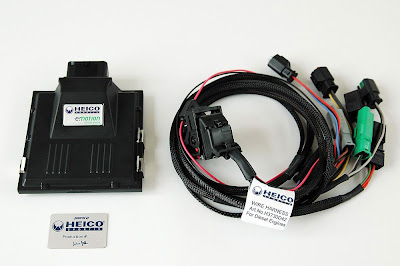
2010 Heico Sportiv Volvo S60

Car Modification-modified cars


Honda civic modification 300x225 Car Modification modified cars

Modifying your car has been a popular pastime for many years. By modifying your car you are able to put your own unique personal touches on the vehicle to make it stand out from the rest. There are many cosmetic modifications that don’t make the car run any different, but then that’s not the point 90 percent of the time! More often car modification is done just to make your car look better or give it a more aggressive race like appearance. These types of modification are simple and will make your car stand out from the rest with very little work. As for the cost of car modifications, that is an altogether different story. Parts are freely available off the shelf from companies such as Spareco, Koni and Spax. For example you can buy Spax suspension, Janspeed exhausts, Momo rims and steering wheels, body kits, light alloy pedals, leather or led lit gear knobs, Corbeau race seats and even race harnesses.

Getting a new set of wheels for your vehicle is a popular choice. There are many alloy wheel styles to choose from. Another popular modification is having your windows tinted. Tinted windows can help keep the glare from the sun out and also makes it harder for others to see into the car. I.C.E or In Car Entertainment is vital to any car modification project. Enhancing your cars audio is extremely popular and the range of products and options available provide DIY car modifiers with a world of choices. Products to choose from include the popular iPod Car Adapter kits, USB, CD & MP3 Stereos and , multi CD changers, front and rear parking sensors (some have video), plus the leads, tv screens and tools required to fit everything. Leading brands include: JVC, Dension, Panasonic, Connects2, Dashmount, Parrot, Alpine, Autoleads, Kenwood, Pioneer & Sony.

Today car navigation systems such as Motevo, TomTom, Garmin and Pioneer navigation systems are key ingredients when modifying a car. Even satellite or GPS Navigation systems come in hundreds of shapes and sizes. The main types of in-car navigation systems are in-dash mounted navigation systems, portable GPS systems, hand held systems, motorcycle and marine systems and finally the remote navigation systems where the GPS system is plugged in to your car radio for instance. When buying a new GPS system its often better to opt for higher resolution screens as they make the map information easier to see. Large memory and a decent control chip make for smooth and efficient operating, the last thing you need is slow loading and in accurate positioning. Most GPS systems have large touch screens, working with a stylus can be tricky so it does help and lastly pay particular attention to how visible and mobile you wish your model to be. If it’s a permanent fixture in your car then bigger models are great, but if you need to take it in doors after use, a smaller model may be the answer. Car security is a factor not only when modifying your vehicle but also when insuring a car with lots of expensive audio equipment in it. Phone you current car insurance company and find out what you can do before your insurance starts costing you more. They will no doubt also require an upgrade to your car security system and there are simply so many companies out there the likes of Viper, Tracker and Clifford. They all sell various systems such as standard car alarms, remote car start systems and GPS tracking systems. GPS stands for Global Positioning Systems. Professional fitment is recommended and car security shoppers should always insist on a certificate of fitment from the dealer fitting the car security system.

If you want to give your car a sporty look without spending a fortune you can have racing mesh fitted for the front bumper of your car. This looks good and can also improve the airflow around the engine compartment. “Eyebrow extensions” is another way to customise your car. These extensions are usually plastic and are fitted to your car’s head lamps. You can get these in a variety of colours and are relatively inexpensive. Car engine mapping is also relatively cheap to have done and performance gains can be substantial. It is recommended that you have engine mapping performed by competent, well known companies as they are best able to advise you of other crucial safety features you should improve when doing so. Up-rated brakes being one of them and more expensive tyres make for better high speed performance and traction to handle the additional engine power. Consider upgrading the oil you use in your engine when you have this done and use an high quality performance air filter, fuel filter and also replace all perished water and oil hoses frequently, if you haven’t already done so. Engine mapping or chipping is basically re-programming your cars CPU and it is given new instructions on how to fuel your engine. The more power you ask for the more gas / petrol your mapping will request along with other parameters such as increasing the airflow to the engine by tricking the motor into thinking the air is colder, this produces more power. All this power comes at a cost though. Most cars that have upgraded their engine management systems do so for more power, not efficiency and in doing so use more fuel and rev higher too. Cam belts should be replaced more frequently and if you plan any engine modifications have a word with the manufacturers about what you plan to do.

There are many things that can be done to modify a car. An entire industry has been created by the need for body styling, engine tuning, lowered suspension and big bore exhausts. Any part of a car can be modified and making modifications is a statement of individuality and personal style. The most popular cars for modifying are usually small, low insurance group hatches. Always update your car insurance company with the latest modifications to ensure your cover is not withdrawn due to something you thought may be ok which they do not. Other insurances like car breakdown cover and Gap insurance cover should not be affected by modifying your car, unlike your Car Warranty policy which will almost certainly be affected. Give your car warranty company a call and make sure your cover will still be provided before you make any changes.

Popular Cars to Modify

Peugeot
All of the cars from Peugeot are popular cars to modify. You can even modify the 106, 206, and 306 pugs. The Peugeot 306 GTi is one of the most popular hatches to modify and tune. You can find a wide range of 306 body kits and tuning parts. Second hand Peugeot vehicles are reasonable and can be found almost everywhere. The insurance group starts off low so it makes it affordable for most. These cars have the potential to make a street racer that you can be proud of.

Citroen Saxo
The Citroen Saxo is one of the most modified cars because there is loads of modifying parts available. You can find everything from body kits to suspension. A popular choice for modifying is the Saxo VTR because it can go from 0 to 60 in less than ten seconds. It also is very fuel efficient and takes corners well. There are plenty of places to get parts and garages that work on them. You can modify a Citroen Saxo to be a real head turner.

Vauxhall Corsa
The Vauxhall Corsa is one of the cheapest and easiest cars to modify. They are also very cheap to insure even when they have been modified. Parts are readily available and they are reasonably priced. The Corsa B is a definite favourite for modifying.

Honda Civic
The Honda Civic has always been a popular car to modify. It has grown in popularity due to the film, “The Fast and The Furious.” The Honda Civic EK is one of the more popular hatches to modify. You can find a wide variety of Honda Civic body kits and tuning parts.

VW Golf
The VW Golf can be modified to look cool and there are plenty of parts available for the later Golf’s. Volkswagen Golf VR6 is a poplar car to modify and there are plenty of body kits and tuning parts available.

Famous Cars

Some modified cars have become popular because of being in a film or on a TV show. Some are noted for their superior performance and some are known for the celebrity driving them. Below are a few of the cars that are considered icons today.

1967 Ford Mustang Shelby GT500 Fastback was the star of the 2000 film “Gone in 60 Seconds.” In this film the car does some unbelievable stunts, including jumping over 15 feet of cars.

1963 Volkswagen Beetle became famous in the “Herbie” series films. Herbie was a little Beetle with a Porsche 356 engine who gave the big boys a run for their money.

1969 Dodge Charger became a muscle car icon through the television series, “The Dukes of Hazzard.” It had a confederate flag painted on the roof and the doors were welded shut. The modified Charger R/T, called the General Lee seemed to be always airborn.

1982 Pontiac Firebird Trans Am was made popular by the television series, “Knight Rider.” The modified Trans Am known as KITT was a hyper intelligent crime fighting automobile. This car could do everything including, see, hear and smell.

1974 Ford Gran Torino was made famous in the television series, “Starsky and Hutch.” It was a powerful muscle car with a 351 Cleveland and 4 barrel Holley carburetor. It was driven hard by two California detectives in the series.

1977 Pontiac Firebird Trans Am was made famous in the series of “Smokey and the Bandit” films. It was a powerful 6.6 liter 200hp muscle car that everyone wants to own.

1970 Dodge Charger was just one of the many fast modified cars in the film, “The Fast and The Furious.” This is a classic move that all gear heads love to watch over and over.

2003 Mini Cooper S-R53 was made famous in the 2003 film, “The Italian Job.” This little mite packed a supercharged 1.6L Tritect engines and was involved in some intense chase scenes.

1979 Ferrari 308 GTS was made into an icon by the television series, “Magnum PI.” The mid-engine V8Ferrari was featured in the original series. The show and the amazing performance of the 255hp GTS made people flock to the nearest dealer to buy one in the 1980’s.

There is a downside to modifying your car. If you don’t have a specialist or someone experienced in modifying your particular make and model of car, you may be wasting your money. You need to select the right combination of modification to gain the most out of your car. If you select the wrong combination you will have spent a lot of money for nothing. Another thing you should remember is modifications to your car may affect the warranty. It will also make your insurance premiums higher. You also have to be aware that some engine modifications can violate regulations and emission laws. You have to make sure that any modifications to your car are safe and won’t disrupt the reliability and stability of the vehicle. Sometimes modified engines are often touchy and require premium fuel.

It is easy to get caught up in the whole modification process and end up modifying the car too much. The rule of thumb should be; less is more. Otherwise you will spend huge amounts of money, which could add up to more than the car is worth. Also, if it is over modified it can be hard to sell and most dealers won’t offer a deal to do a trade in for the car. Just keep these factors in mind when you are going to modify your car to express your style and personality.