Most concepts presented at motor shows remain just that: a stylistic exercise by the automaker’s designers, a “what if” proposal, a flight of fancy. At best, a few of them make it into production, mostly in a much more conventional form. But as with every rule, there are always an exception.
Volvo’s SCC Concept is one such example. Presented at the 2001 Detroit Motor Show, the Swedish carmaker’s Safety Concept Car was more than just a glimpse into the future or the main inspiration behind the C30’s design: it was the car that, above any other, influenced Volvo’s technological advances.
The Highway Loss Data Institute (HLDI) and the Insurance Institute for Highway Safety (IIHS) released a study showing that Volvo’s XC60 active safety systems contribute to it being engaged in 27% fewer damage accidents and 51% fewer bodily injury accidents than other mid-size luxury SUVs.
Always according to the study, the XC60 is also 19% less likely to be involved in accidents compared to other models in Volvo’s range. IIHS said that this is due to the SUV's standard low-speed collision avoidance system called City Safety.
Volvo wants to increase its sales in China by at least 60% this year, to 50,000 cars, and to 200,000 by 2015. And how does the Swedish carmaker, which is owned by China’s Geely, intend to do so? By adding user-friendly comforts and a touch of luxury, according to Volvo’s CEO, Stefan Jacoby.
The reason for this shift is that Volvo’s greatest asset, safety, is not a unique selling point any more now that most rivals have made similar advances in this sector.
Did you know that there are holiday packages that bundle airfares, accommodation and cosmetic surgery? It’s a sort of incentive program for women (and some men) to have their surgery done overseas and is especially popular in Britain and Australia. Well, as some of you may already know, there are similar programs for people who want to buy a new car.
These so-called, “European Delivery Programs” are offered by companies as diverse as Audi, BMW, Mercedes-Benz, Porsche and Volvo. Effectively you’re bundling a discount European vacation with your new car purchase.
Electric Vehicles, or EVs, are the future. Or so the automakers say. And they would be correct, if it wasn’t for a significant disadvantage over petrol or diesel powered models: their abysmal range which makes them suitable only for limited city use.
Volvo is taking measures to solve this problem and make its EVs attractive to the public by adding an extra 1,000 km (621 miles) to their range. The solution, which has also been adopted by other models such as the Chevrolet Volt and the Audi A1 E-Tron concept, is the addition of a “range extender” internal combustion engine.
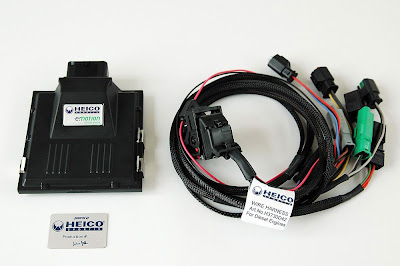
Volvo’s Australian arm has pulled the wraps off a conceptual performance version of its S60 sedan. Based on the S60 T6 R Design, the S60 Performance Concept is an Australian initiative and utilizes two partnerships within the Volvo family - Polestar and Heico - for some very discreet upgrades.
From the imaginative world of TV reality shows comes our next story. The show in question is “Wie wordt De Allerslechtste Chauffeur Van Nederland?” which is Dutch for “Who is the Worst Driver in The Netherlands?”
However, once you watch the video after the break, you may considering an alternative title in the likes of “Who is the Most Idiotic Reality TV Show Producer in the World” since the enlightened creators of the show came up with the fabulous idea of testing Netherlands' most incompetent drivers on an unsafe course.
With the recent surge in used car prices in the U.S., many people leasing vehicles have discovered the surprising fact that the market value of their automobiles is greater than the dealer’s quoted residual (buyout) price.
All a would-be lessee needs to do is buy the car from the dealer and sell it on privately. The dealer gets the residual amount and the former lessee pockets a tidy sum.
Take the example of a 2008 Volvo XC90. With more than twelve months left on the lease, the dealer’s buyout price was a quoted US$18,500. Compare this to the amount the lessee was likely to get by selling the car privately: a far more substantial US$27,000. That’s a profit of US$8,500!
In the UK, car theft is down by more than 60% over the last seven years thanks to improvements in anti-theft technology. Coded car keys, alarms, immobilisers, better locks, strengthened glass and built-in tracking devices have made the modern automobile virtually impossible to steal.
Some 80% of car thefts now require would-be thieves to steal the owner’s keys or otherwise load their targets onto trailers for transport. And even then, tracking systems in some high-end cars mean these cars are recovered rather quickly.
Volvo will stop selling its mid-size sedan, the S40, and its station wagon “twin”, the V50, in the USA during the 2012 MY. The reason? You guessed it; poor sales. According to Volvo spokesman Dan Johnston, US deliveries of the two models were disappointingly low with the S40 down 29% in 2010, while the V50 fared even worse, with its sales dropping by more than 50%. Read more »
And by “King of Overkill” we mean, of course, the….how should we put this delicately… excessively ornamented Porsche Cayenne SUV photographed outside a dollar store in Ontario, Canada, last week by Carscoop reader Jonathan Fernando.
This blonde Swedish diva [aka a previous generation Volvo S40 finished in a yellow hue] was spotted all dressed up and ready to meet the king of her dreams at a parking lot in Toronto, Canada, by another one of our readers, James Dong.
I've watched a few flash mob marketing events on YouTube and wonder why am I watching this. It's interesting for maybe 10 seconds but a 1:38-minute video of Can't Touch This... Is this really a good use of my time? I find I have the same experience with the latest trend in event marketing - 3D Projection Imaging.
Just like flash mob videos, 3D Projection Imaging videos always show the people at the event with their mobile phones capturing the moment and being in awe of what is happening where they are. That experience doesn't translate well for someone watching it happen on a YouTube video while at their computer. I guess you just had to be there to really get the experience.
3D Projection Imaging is cool looking and it is certainly more likely to get shared than say the typical TV ad or other attempt at social content, but that's a guess as I don't have any deep dive analysis into whether that is true or not. What I do know is that interesting content that is promoted effectively is likely to see more shares than stuff that is boring and/or has no media push.
Hyundai comes with the latest attempt at trying to capture interest with their Accent promotion and even include a Making of Film. The execution is nicely done with the suspended vehicle looking as if it is driving in multiple scenes there on the building. And even if 3D Project Imaging is starting to get old (see several automotive examples below), it is something fairly recent here in the States and showcases Hyundai's tag line "New Thinking. New Possibilities" in a creative way.
For more examples of how automotive marketers have used 3D Projection Imaging in campaigns, please checkout the following examples from Volvo, BMW, and Volkswagen.
Volvo gave it a try in Frankfurt, Germany on September 2009:
BMW's execution May 2010 in Singapore:
Volkswagen Polo showcased their attempt in April 2010. Be forewarned this example shows what one can do without a big budget:
Volvo sent out a "Stay in the Loop" email that solely communicated connecting with the company on Facebook and Twitter. It's the first time I've seen any automaker send out an email communication out to their mailing list that only promotes the brand's social presence. Most emails are putting some sort of link to a Facebook page or Twitter account, but that is usually relegated to the end of a quarterly email communication.
There's nothing really significant here from Volvo, but it is interesting to see the brand solely promote its social links with zero promotion of a vehicle. What's nice is the call-to-action is straight forward, but do customers or potential customers really want your company sending them emails about liking them on Facebook?
The new Volvo S60 is sexy. You heard me right, a Volvo can be sexy with its smooth, flowing lines. I saw the concept car last year here in Detroit and it was the most interesting, beautifully designed Volvo since the P1800. Fortunately the production version of the concept from the 2009 show has remained pretty much intact to become the 2011 Volvo S60.
Yes it is sexy, but is it really naughty? Volvo’s marketing team thinks so. They had some fun prior to the car’s debut today in Geneva with two video teasers promoting the Volvo S60 reveal website: http://naughty.volvocars.com. The two preview videos were a good way to build some buzz about the vehicle’s new website and created a mental shift of thinking of a Volvo as naughty. Naughty definitely sparked some interest since it seemed so far outside of Volvo’s normal brand image of family safety.
Michael Persson, director of global marketing communications for Volvo says “The all-new Volvo S60 is a particularly dynamic car with an exciting design and innovative safety features… We are showing what it can actually do and just how much fun it is to drive.”
The Naughty Volvo Cars website features a couple videos of the S60 aggressively driving in some empty road slaloms. One of the tests is an Elk Test that demonstrates “the S60’s amazing responsiveness in an emergency maneuver.”
After watching the tests the website viewer can submit ideas to make the Elk Test “even naughtier, more playful.” Users are asked to submit ideas with the top five ideas going up for a group vote with the top voted idea to be filmed by the Volvo S60 team.
Ideas are shared on a Discussion board on the Volvo brand Facebook fan page. As of today most of the ideas were not ideas at all, but instead Volvo fans asking for the return of a Volvo S60R as several enthusiasts figured a naughty Volvo implied a fast, Type R Volvo that did not happen today.
The site is pretty straightforward stuff. Navigation is clear and the video content is presented in a clean, easy-to-use format. The use of a Facebook discussion board made for an easier development schedule, but it does seem a bit disconnected since it doesn't warn the user a new window is opening and that the Facebook page is there to submit naughty ideas.
It also still isn’t entirely clear what is so naughty about the S60 after watching the videos and reading the site copy. The message feels very disconnected especially when the site asks, “want it naughty?” It just sees a bit odd for a vehicle that is probably going to sell to wealthy, middle-aged, professional men and women who buy a Volvo to protect their kids.
Volvo just wrapped up their very successful virtual road trip where online teams were to “drive” a C30 DRIVe from Sweden to Egypt. Each team member would “pass” the car on to the next participant who lived as close to 1,333 kilometers as possible, the number being the distance the car can drive on one tank. Friends were competing to be first to complete the virtual journey around the world in 80 days.
It was another example of six degrees of separation where teams were formed virtually using a network that extended beyond just the team member’s friends, but further to their friends’ friends. The teams competed to win to have 15,000 Euros donated by Volvo in their name to a wind farm project in Turkey. Not exactly the most exciting prize, however, it is a positive prize for those interested in more altruistic Facebook activities, which are very popular on the site.
A Success
"To be number 17 on the list of most installed Facebook applications and number one among branded is great and more than we ever expected", says Lukas Dohle, Live Communication and Social Media at Volvo Car Corporation in Gothenburg, Sweden. They had over 63,000 teams play the game. Of course, a team could’ve been just one person installing the application and doing nothing with it after the initial install. Even so, the application definitely reached a very broad global audience and lead to some great press coverage too.
What I really like about this example is that it found a way to integrate well within the Facebook community and by doing so it reached a lot of people who might have otherwise never become familiar with Volvo’s C30 product. The charitable element also works very well in the community and I’m sure led to participation from those not really interested in anything about a new car.
Real Butts In Seats Road Trip
"Whither goest thou, America, in thy shiny car in the night?" - Jack Kerouac, On the Road
Another marketing road trip idea was announced a couple weeks ago from Chevrolet. It isn’t a virtual road trip; instead, Chevy put together 8 teams throughout the U.S. to compete in road trip scavenger hunts as teams travel to the popular South by Southwest (SXSW) music, film and social media event in Austin, Texas.
Named the “See the USA in a Chevrolet: A SXSW Road Trip” -- I’m hoping for a challenge to include Dina Shore or Pat Boone somewhere in the trip -- the teams will compete for social media views through Twitter tweets or other social media comments and views. Chevy has even setup a Posterous website to house the content developed along the way. They’ll also showcase the road trip using a feed on GM’s well-known Fastlane Blog.
This social outreach concept is developed around the idea that if you get enough influencers your marketing idea will develop a buzz around it that will extend beyond just the people participating in the road trip.
GM’s example is reaching out to social media influencers; mostly Public Relations and marketing professionals who have some decent connections on social media sites. Since the participants have significant social followings, the brand is counting on the buzz to build across the participants’ network and further to other networks that will follow along or participate (one form of participation right now is having people suggest what activities the teams should do on the trip.)
The Real Challenge: Relevance Beyond Participants
It will be interesting to see how the Chevy SXSW event develops. The hardest part is creating interest for those not participating in the event. There will be a lot of buzz shared by trash talking and co-promotion across teams, but will those not on the road trip care to share in the conversation?
The connection with the SXSW event should help extend the buzz beyond the teams, since the SXSW event attracts most of the social media elite who might help promote the Chevy road trip and this goodwill should increase interest just because some social media expert is talking about it.
It definitely is a strong event tie-in for a road trip that is meant to gain interest using social media tools and behaviors. Everyone can follow the teams using the hashtag #chevysxsw on Twitter and at the Posterous website Chevy is setting up for when it kicks off the week of March 8. I’ll definitely be following to see if it extends reach beyond just the participating teams.
Conclusion
It would be great to know how much Volvo spent or Chevrolet will spend promoting and implementing these road trips. Reach is definitely an important aspect of the road trip marketing idea. Getting people interested in participating on virtual teams or promoting real teams all add to the word of mouth of the projects and hopefully reach consumers who might never pay attention to a TV ad or online banner.
The important ingredient is making the events relevant to consumers. Volvo did that through a contest where a charitable donation was tied to the goal. The Chevy event will have a more difficult time extending the interest beyond those participating.
Here’s to viral magic whether it’s virtual or real.
“We had finally found the magic land at the end of the road and we never dreamed the extent of the magic." - Jack Kerouac, On the Road
There is one clear leader in this month’s Automotive Facebook Fans by Brand report: Volvo. They ran some advertising campaigns developed for the Facebook platform. The first is one that’s been up a few months but was continuing to get some media dollars, Drive Around the World. The other is a lifestyle brand experience called Ice Camp that also has its own Facebook page.
The Drive Around the World has Facebook friends travel together as each friend takes over the drive like passing a baton in a race. Volvo will then donate 15,000 Euros to a charity that fights Global Warming. Obviously the game has broad appeal with the charity aspect and social enablement. Altogether Volvo saw a 421% increase in January fan numbers. Quite impressive though like many of the huge percentage changes we have seen they only started with 11,875 fans at the beginning of the month.
Most brands saw typical gains in January. GM brands saw a slowing down since backing off media spend on the platform, particularly Chevrolet and Cadillac (both had 50% gains in recent months), but this is typical and shows the difference between organic and media driven growth.
Zoom. Zoom.
Mazda saw a nice improvement this month. They also moved their Mazda North America page into the Mazda Facebook fan page which got rid of some confusion around how one follows the brand. The now retired Mazda North America fan page was more for Public Relations communications which seemed duplicative to the http://www.facebook.com/Mazda fan page.
Both MINI and Acura ran advertisements in Facebook that I caught during the month. The Acura one was for increasing fans of their ZDX vehicle page, not the primary brand fan page. Meanwhile MINI promoted their coming Countryman SUV. This shows that both brands are interested in further developing vehicle fan pages which to me seems odd since both are niche vehicles and it would be better to get consumers engaged more with the brand than an isolated product.
Toyota’s Public Relations Issue
Toyota is an interesting brand this month, not so much for its growth but it’s public relations fiasco with its faulty pedals on 8 vehicles. Currently, the Toyota fan page has a status update pointing fans to http://www.toyota.com/recall for information about the company’s response and updates. This shows that brand pages can act as another communication medium to keep consumers up to date on major announcements.
Brands be warned; one “fan” keeps posting a news video that discusses Toyota allegedly concealing and destroying information. That “fan” has posted the story five times with four posts having been deleted by the page administrators. He continues to post the story on the Toyota fan page wall. So, it works both ways and the brand should just let the post live since it is just a link to a news story and removing these posts might cause more of a PR issue.
Volvo has some fun in this European ad for the Volvo C70 hardtop convertible. The concept is well, a wife-swap idea, but it also pokes some fun at how clueless we men are when it comes to paying attention to the details in life. Or is that we are so self-absorbed that it really doesn't matter which attractive woman we are sharing our cars with?
Most interesting is how the ad gets away with a wife-swap theme without coming off creepy or offensive. Other than some brief shoulder nudity during the women swapping blouses, the ad is simply a great way to showcase the two unique variants of a hardtop convertible. As someone who ones a hardtop convertible, I get a lot of people who are surprised my car is a convertible and not just a coupe. It really is two cars in one and the Volvo ad plays off that idea in an interesting, creative way.
One has to wonder if this new idea runs counter to another Volvo C70 ad called "I Adore You"? In this ad, a couple share a mutual love for the C70 as they gaze into each others eyes. Perhaps this is the start of the relationship and months or years later we get the new wife-swap ad showing it really doesn't matter who you are with as long as you're in a Volvo.
Well here it is my take on the expected, every blog and news source is doing it - Top 10 List. I looked at marketing efforts across TV, print, events, and digital to come up with ten U.S. marketing implementations that caught my eye. They did for a variety of reasons and yes I know the list isn't perfect and I could have added or removed some things in here.
I also would've included more Ford, Lincoln and Mercury efforts but did not do so because I didn't want to come across as being too self-promoting, besides, others will certainly talk about some of the great stuff we did this past year; though, there was one marketing event I just couldn't avoid talking about. The Top Ten:
I had a hard time finding ten automotive marketing efforts that really stood out in 2009. A few efforts really standout while other ideas could exist in a Top 10 list or not. This set of banner ads from MINI during the month of October really impressed when few were able to capitalize on a particular holiday. In fact, many of the holiday ads right now are so uninspiring: red bows, snowflakes, and snow-caped mountains. Yawn.
Last October MINI got it right by running several banner ads that played on the “face” of the MINI Cooper’s front fascia. Their campaign extended across mediums into TV, national radio and of course online. The ads show how an automotive company can have fun with holiday-focused campaigns while maintaining the brand’s integrity and spirit.
If you are a regular reader of this blog, you’ll know that I’m a bit of a BMW fan. I’m honestly trying to stay as objective as possible and almost didn’t include this bit of copy-writing back-and-forth, but it caught the attention of a many online and even the New York Times.
Audi ran a billboard in Southern California reading “Your move BMW” with an image of their very impressive A5 coupe. The local BMW dealership, Santa Monica BMW, retaliated by buying the billboard across the street reading “Checkmate” with an image of the new BMW M5 coupe. Audi soon answered back by changing their A5 billboard to a R8 with the lame less effective "Time to check your luxury badge. It may have expired" billboard, but by this time the joke was over and BMW had clearly won the copy-writer race.
What this demonstrates is how foolish ads are when you bring in your competitor. By acknowledging BMW, the Audi A5 ad had made it easy for BMW to mock the comparison. Even without the mocking billboard, BMW still won because Audi was running an ad that made you think, “what does BMW have that has Audi so concerned?”
This is an approach similar to what GM is doing with their “May the Best Car Win” campaign and with the Buick LaCrosse campaign that is very openly challenging Lexus. I’ve heard several podcasts, read many articles, combed quite a few forums and what seems to be happening is that Honda and Toyota owners are all laughing at GM for making small 1 or 2 MPG wins over a competing Honda or Toyota model only to reinforce their current ownership decision because the real win is resell value and long-term quality. If anything, the GM spots are causing Honda and Toyota owners to mock the GM ads in similar fashion BMW mocked Audi.
The Audi BMW billboard war was just a lot more fun and showed how something as simple as a few well-placed words on a billboard can be more viral than any overly thought out video or social media campaign.
This is a fun ad campaign that incorporated the data from someone’s Facebook profile. It “illustrates the future of database-driven ‘smart ads,’” according to Rick Mathieson, the author of The On-Demand Brand.
The application did some basic word matches to determine which Volkswagen would be best for the person’s data it was analyzing. It was a simple, interesting way to connect a consumer with a VW product that they may not have considered. I think what was most interesting is that the application showcased how Facebook data could connect with a company’s products in a non-intrusive way.
Unfortunately, the application never said why a Passat CC is right for me. But if I was going to buy a VW it was pretty spot-on, proving someone knew what to look for on my profile. 7. Subaru WRX STI Gymkhana Two Project (link)
Ken Block, a world-class rally racer, showcases his rally Subaru in this video which promotes his company DC Shoes partnered with Subaru for the Gymkhana Two Project. The British auto enthusiast show Top Gear even picked up the Ken Block buzz when they had Ken showcase his rally skills on a recent episode.
This video is quite possibly the best cross-promotional marketing I’ve seen. It gets it right for Subaru, DC Shoes and Ken Block.
What makes this effort so captivating is how seriously cool the stunt is and how it caught a significant buzz on the web. To date, the video has over 9 million views! Now that’s how viral video is done. Admittedly the video showcases the DC Shoes in the video’s beginning but it certainly demonstrates how uber cool a Subaru can be too.
The best line in the Honda Insight campaign is “the Hybrid for everyone” line. It quickly separated the Insight from its costly competitor the Toyota Prius. Unfortunately, the product positioning statement in the ads didn’t give Honda the boost they needed. Most of this is due to a poor product, not poor marketing. The product couldn’t compete with the MPG King, the Toyota Prius. Plus the Insight suffered from too much of a me-too Prius design that was based on the outgoing model, making it look even more substandard once Toyota launched its much sleeker redesigned 2010 Prius.
That said, the Insight’s marketing caught people’s interest with its below $20,000 pricing strategy and a marketing campaign that made the Insight look like a formidable candidate to take on its more expensive hybrid rival by showing hybids can be affordable, unfortunately Honda just was a much lesser car in what was becoming a crowded hybrid sedan market with the Ford Fusion Hybrid and the new Prius.
An automotive brand hasn’t let a little creature define it’s product since the flop of “The Caddy that Zigs” when the Cadillac Catera TV ads featured Cindy Crawford and a talking duck. Fortunately, Kia avoided the pitfalls of cartoon animals and decided to go with head bopping Zhu-Zhu pets to go along with it’s “A New Way to Roll” campaign. The cute hamsters were an instant hit as many in the target consumer group, 20-somethings, enjoyed the hip hamsters.
The latest iteration is seen in a Kia ad featuring the Forte Sedan, Forte Coupe and Soul that features one of the hamsters plastered to a showroom window. It looks like the brand is accepting its hamster-ness. The delicate line Kia must watch for in 2010 is not becoming only about hamsters. It could really go too far: newspaper-lined floors instead of floor mats anyone??? 4. Volvo XC60 Integrated Twitter YouTube Road Block (link)
Social media was the buzz du jour in 2009 and it most likely will continue in 2010. One of the more intelligent integrations of social media, online media, and event marketing was this effort from Volvo during last spring’s New York Auto Show.
Volvo was promoting the City Safety feature of its all-new XC60 SUV. City Safety automatically engages the brakes if the driver gets too close to the car in front. It’s a bit of a complicated, hard to understand feature that is best understood through real-life experience. To accomplish this for everyone who didn’t run right down to their Volvo dealer to try it out, Volvo decided to have people visiting the New York Auto Show experience it outside of the show’s convention center. Once someone tried it out, they could Tweet their experience giving instant feedback to the world. Volvo incorporated the comments in a live feed in a banner ad they ran on YouTube for that day.
I’m certain that we will see a few other automotive companies emulate this integration as the auto show season kicks up here in 2010. 3. Nissan Cube Mobile Device (link)
If there is one ad that really captures where the automobile is in the mind of Millennials, it’s Nissan Cube’s Mobile Device TV spot. The ad features a car that does not move and merely acts as a connection device for connecting with one’s friends, music and lifestyle. Everything moves around the Cube. The wheels are stationary. It is not about driving, it’s about socializing.
Nissan’s treatment of the car as more of a smart phone on wheels is quite interesting. It really says the car’s benefits to a person’s life is not horsepower, a growling exhaust note, or a sleek design. Nope. It’s quite the opposite here. Here the car is more about its connectivity to your life and how well all your gadgets interact with it. This is a drastic change in how a car is sold and I’m quite certain it won’t be the last.
Ad Age readers voted Hyundai Marketer of the Year. The main reason is 2009 was a year all about results. A company that could maintain sales or market share was a winner in this brutal economy, but Hyundai did more than that. It was one of only two auto manufacturers to increase sales through all of 2009 (compared to 2008 sales.)
The most notable thing Hyundai did from a marketing decision was implement their Assurance program that said it would let buyers of a recently bought Hyundai return the car if they lost their job (a few easy to understand restrictions applied.) It was an idea born out of consumer research that found potential Hyundai buyers were apprehensive mostly due to their concerns of rising unemployment impacting them. So, Hyundai answered with this campaign that was further promoted during the Super Bowl in early 2009. The high-profile TV spot was a great way to get the word out and it kept Hyundai sales in the positive while most manufacturers were losing 20-30% year-over-year sales.
General Motors and Ford both came back with their own versions of the Assurance program but by that time most in the industry were talking about the latest sales boosting craze – Cash for Clunkers that would define the summer months.
Hyundai continued to launch all kinds of extensions of the Assurance program, adding $1.49 a gallon gas price for a full year and additional cash incentives. None of the other ideas caught as much attention as the original Assurance program, but that didn’t matter as consumers understood Hyundai had a safety net program for uneasy shoppers. The brands impressive results with great new products and timely marketing campaign kept one company in this industry from a negative year.
I don’t usually add anything from Ford, Lincoln or Mercury to this blog, but I can’t ignore the Fiesta Movement and what it has added to the automotive marketing space in 2009. The Fiesta Movement is all about generating buzz, buzz, buzz! It did so by giving 100 “Fiesta Agents” a European model Fiesta for 6 months and letting the Agents document their fun with the car using YouTube, Twitter, Facebook, MySpace, basically across social media. Agents were chosen primarily for their social media influence and creativity.
Why I think this is the #1 automotive marketing effort for 2009 is not about me praising my own client or marketing firm I work for; rather, this idea of letting influencers (whatever that means) experience cars in an unusual, very involved way is going to be the big idea for many campaigns to come. Rumor has it that Honda is already thinking about doing something similar with the Insight as is another undisclosed auto firm.
The attention Ford has received from the Fiesta Movement is quite impressive and sure to be copied. It was a great way to get the word out about a product that was originally almost 18 months away from debuting on dealer lots. In fact, the awareness of the Fiesta is similar to Ford’s Edge CUV that has been in the market for several years.
The only question remains is how will all the early buzz of the Fiesta Movement impact sales? Will people not see it as a new fresh car to buy after 18 months of promotion before launch or will the momentum continue as Ford intends as The Fiesta Movement Part II is underway right now?
Either way the Fiesta Movement will probably be one of the few if any campaigns our industry will remember 5 years out from 2009 and that is mainly why I gave it the top spot in my list.
It's highly unusual for a car company commercial to generate any buzz, but team up with this Fall's most buzz worthy film and people start watching and commenting about your ad. The latest movie that uses a car as star in a film is Twilight: New Moon. A Volvo XC60 is driven by the film's protagonist, Edward, and with fans eagerly waiting for the film's debut this Friday, the commercial is satisfying some of that need with over 240,000 views and 160 comments on YouTube. And the hysteria is reaching epic proportions with comments like this from fans, "SEXY CAR DROVE BY A SEXY˛ˇ MAN !!" Way to go Volvo, your SUV is "sexy!"
What's most intriguing about the Volvo promotion is that it extends beyond the normal email or online marketing campaign for a contest. In this case, the contest is further promoted in a TV spot which by most contest standards is quite unique. But with a popular film to tie it all together, it's providing some excellent awareness for Volvo's first entry-level luxury SUV.
The promotion online includes a sweepstakes and contest with the contest requiring visitors to solve six phases, each borrowing knowledge from fans of the Twilight series. The first to solve all six phases wins a brand-new Volvo XC60.
The contest is the most confusing thing about the promotion. I have been getting emails from Volvo promoting each phase of the contest, but every time I click to "play the latest phase" I end up at the homepage of the WhatDrivesEdward.com site instead of viewing the instructions for the latest phase. Some deep linking into the What Drives Edward site would've been very helpful.
Volvo, probably realizing most Twilight fans are in their twenties and early thirties, decided to additionally promote their entry-level car the Volvo C30. Both in email communications and on the What Drives Edward site, there are side-by-side images of the XC60 and C30 for visitors to click-on to get more information about the cars. This is a nice way to extend the product portfolio to a more relevant product for site visitors, since the SUV may not appeal best to the contest participants.
If you wish to try your Twilight knowledge, there are a few days left to get the six contest phases solved or you can just enter the sweepstakes for your chance to win a XC60.